
The Georgia Bulldogs play in a league where language mirrors leverage. Inside Sanford Stadium, what you hear—personnel numbers, coverage calls, situational jargon—maps directly to how Georgia wins snaps and, eventually, Saturdays.
How Georgia Builds Drives
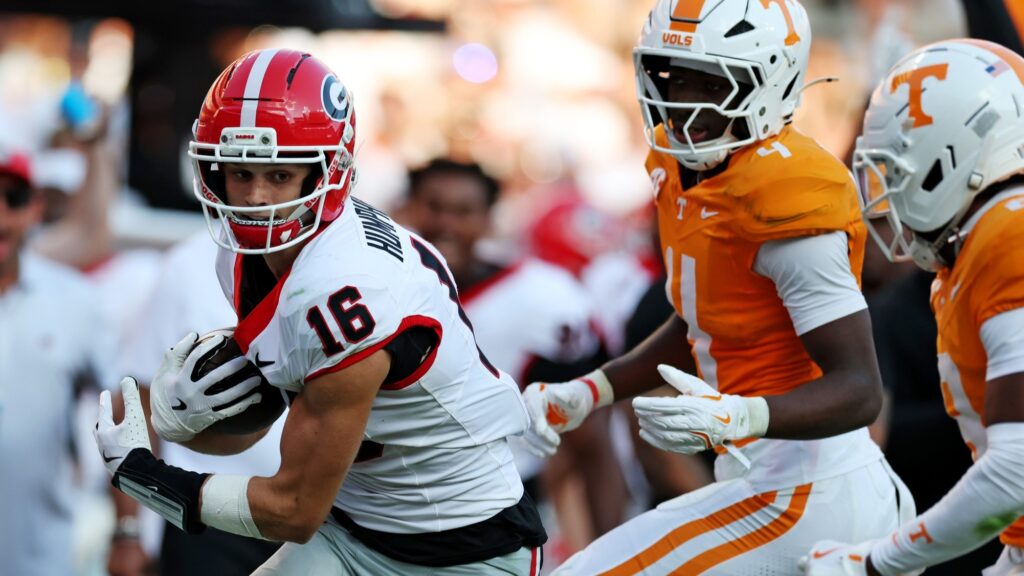
On offense, Georgia toggles between 11 and 12 personnel—that’s one running back with either one or two tight ends—to set edges for the run and layer play-action into the passing game.
The choice is less about fashion and more about levers: with two tight ends, Smart’s offense (currently coordinated by Mike Bobo) can look heavy without surrendering spacing, then sell the same run picture and throw shot routes that stress safeties.
Georgia mixes zone concepts that create cutback lanes with gap schemes (counter/power) that pull a blocker to a marked crease, and you’ll see tempo used in pockets rather than as a lifestyle—just enough to trap personnel or keep the defense in vanilla rules.
When it’s working, the Bulldogs aren’t chasing magic; they’re stacking explosives (roughly 15+ yards on a pass, 10+ on a run) off a run/pass marriage that forces conflict defenders to be wrong.
The staff will sprinkle RPOs—run-pass options keyed on a specific defender—but the identity isn’t to live on post-snap coin flips. It’s to keep success rate high (on schedule on first and second down, conversion on third) so the call sheet never shrinks.
That’s why you’ll feel the offense value first-down efficiency more than raw tempo: second-and-manageable opens the whole menu without inviting risks that leak field position.
How Georgia Travels on Defense

Smart’s defense is famously multiple, but it isn’t random. The front often lives in what coaches call a tite/mint structure: three down linemen aligned to choke interior gaps, with outside linebackers controlling the edges so the inside linebackers stay clean.
Behind that, Georgia majors in pattern-match quarters—zone structures that become man based on receiver releases—so quick access throws don’t come free.
On passing downs, you’ll notice simulated pressures/creepers: the picture shows blitz, the rush is still four, and someone you didn’t expect is part of it while another drops out. The goal is consistent: win first down, muddy pre-snap pictures for the quarterback, then close windows without living in pure man every snap.
That structure explains the traits Georgia recruits and rotates. Interior defenders who can anchor and dent double teams make the mint front matter; edges who can set contain and still transition to rush keep perimeter runs honest; corners and safeties who tackle in space turn explosive-prevention into a habit rather than a hope.
When you hear fits and leverage, think geometry: gaps accounted for, help arriving from the right shoulder, missed tackles turning into six-yard gains instead of sixty.
Situations Where the Game Turns
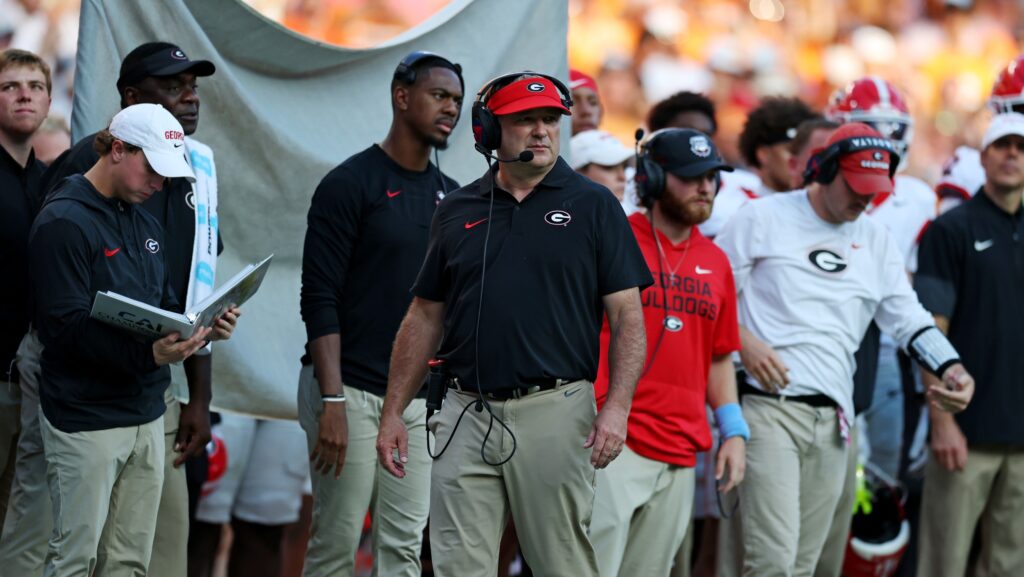
The Bulldogs track success rate because it predicts drive math: ≥50% of the line to gain on first down, ~70% on second, 100% on third/fourth keeps the whole plan intact.
On third-and-medium, the staff plays chess—offense uses motion and bunch to beat pressure rules; defense disguises rotations and rallies short of the sticks.
Inside the red zone (and the “green zone” near the 10), every call is framed as touchdowns vs. field goals; you’ll see condensed formations and rubs on offense, condensed windows and bracket leverage on defense.
After turnovers or fourth-down stops—sudden change—both sides look for fast points or a three-and-out before emotions reset. And with a lead, Georgia leans into four-minute offense, draining clock with efficient runs, safe completions, and first downs that end the argument.
Coverage, Leverage, and the Field
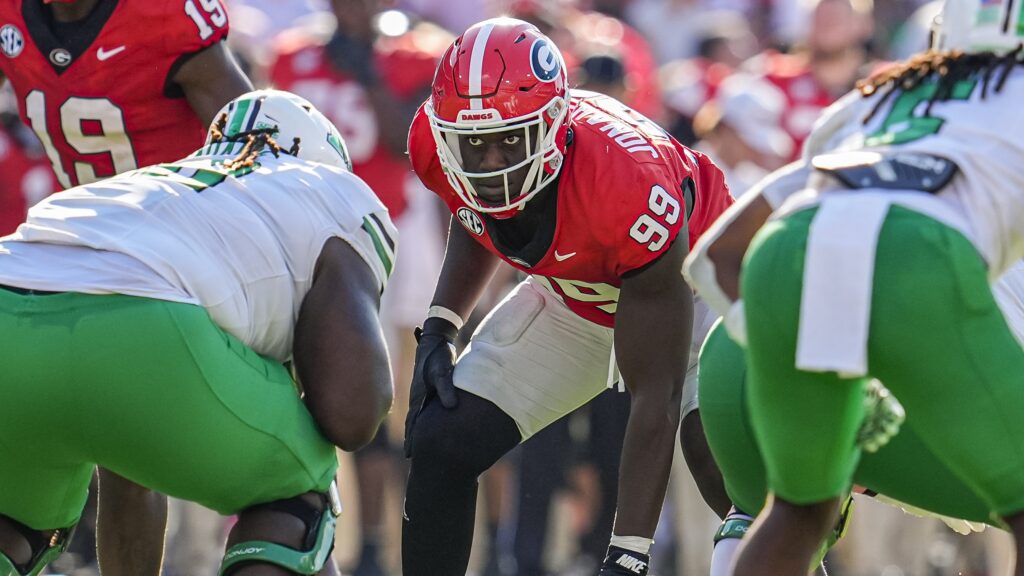
You’ll hear broadcast references to the boundary (short side) and field (wide side). The offense hunts favorable space with formations and motions; the defense rolls help accordingly.
Coaches harp on eyes (find keys, don’t chase candy) and leverage (deny the route a receiver wants most). When a star pass catcher demands attention, Georgia will bracket—high/low or in/out—without blowing holes in the structure elsewhere. None of this is exotic; it’s repetition under pressure. That’s why the unit often feels the same even as names cycle to the NFL.
Athens, in the Vocabulary of a Saturday
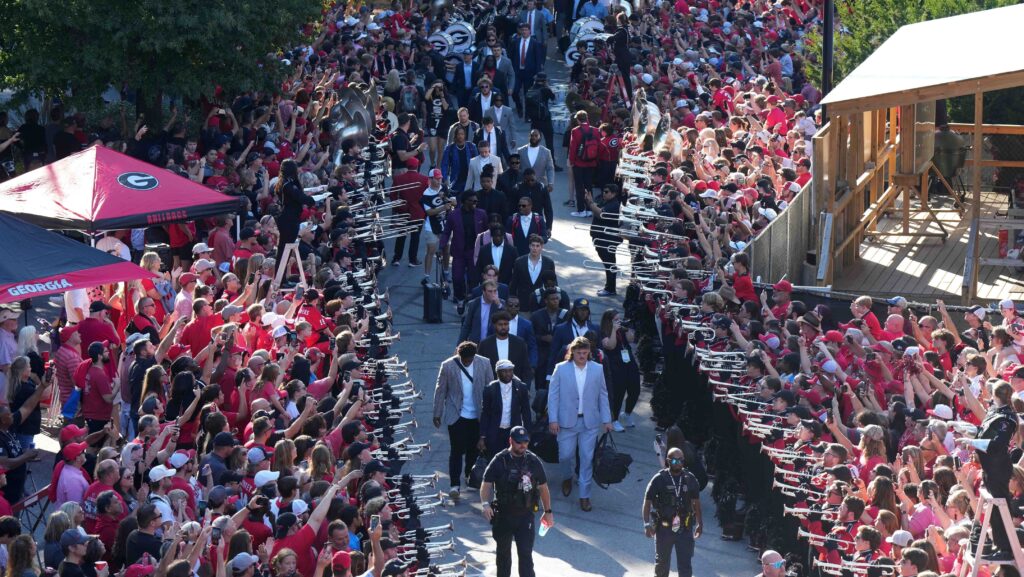
Georgia’s traditions double as timekeepers. The Dawg Walk turns the team’s arrival into a campus-wide procession. Inside the bowl, Calling the Dawgs is a shared cadence before key snaps, and “Between the Hedges” isn’t just branding; the sightlines make routine plays feel close. If you’re bringing a first-timer, the lesson is simple: learn the language early, and the day explains itself.


