
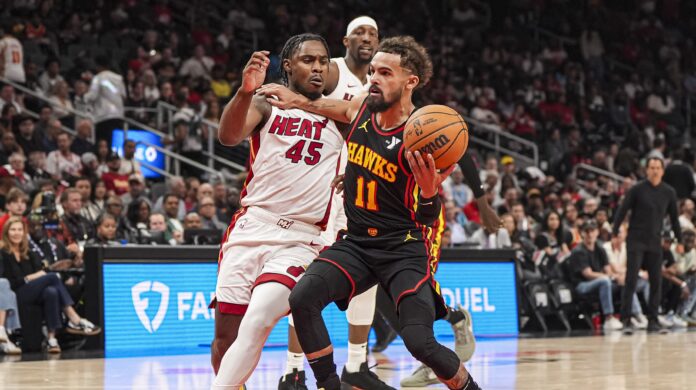
The Atlanta Hawks and Miami Heat don’t just trade wins; they trade problem sets. Miami under Erik Spoelstra leans on switching, help that arrives on time, and a shot profile that punishes hesitation.
Atlanta answers with pick-and-roll creation, first-side advantages, and star poise late. Inside State Farm Arena or in Miami, the game usually reduces to three questions: can the Hawks win early-clock edges, finish the glass, and keep Miami out of comfortable midrange rhythm?
Why 2022 Set the Benchmark
The 2022 first round turned theory into tape. Miami’s connected switching and stunt-and-recover plan narrowed windows, shrank lobs, and forced Atlanta’s creators to a tougher shot diet.
The Heat closed the series 4–1, and the lesson stuck for both sides: if Miami flattens first-side actions and stacks second-chance points, the night tilts their way; if Atlanta gets to downhill reads before the switch lands, the pace becomes theirs.
The 2023 Reset: A Road Proof
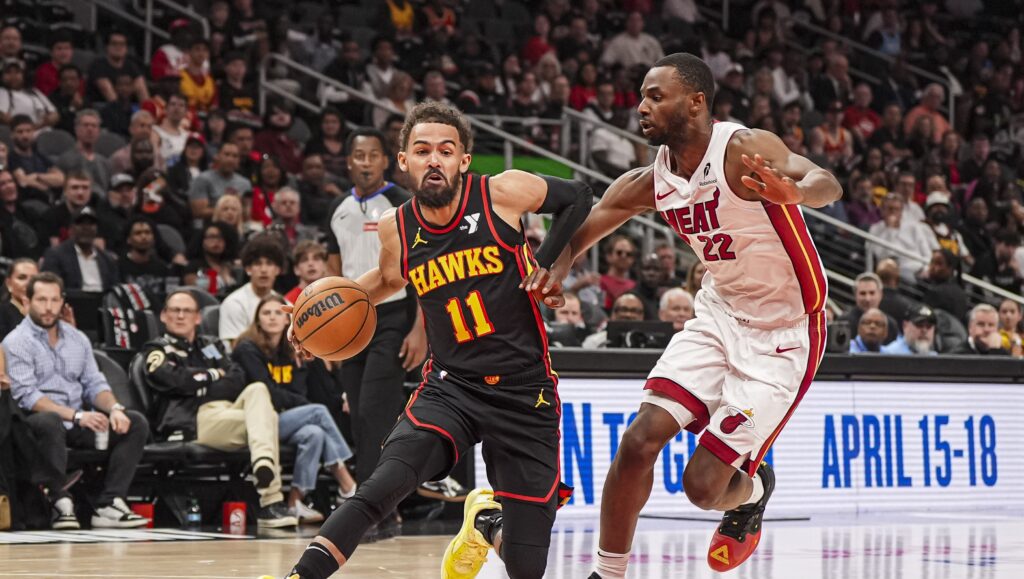
In the 2023 Play-In, Atlanta solved enough of the puzzle to win in Miami. Trae Young controlled tempo, and Clint Capela’s work on the glass (21 rebounds) bought extra possessions; the Hawks won 116–105 and secured the 7-seed.
It wasn’t a stylistic makeover as much as an execution check: early-clock hits, strong-side spacing, and defensive rebounding that ended Heat runs before they started.
Styles in Conflict
Miami’s best versions make you live in the midrange tax—pull-ups over length and late-clock bailouts that add up over four quarters. They toggle between switch, show-and-recover, and zone pockets to steal rhythm.
Atlanta’s answer is sequencing: hit the first action to force a rotation, play behind it with pocket passes and lobs, and spray to shooters before the help can reset. If the Hawks value the ball and clear the defensive glass, their creators can dictate the tempo. If the Heat force stalls and win the middle-third possessions, the game slows into their comfort zone.
Where It Usually Turns (Short List)
- First-Side Advantage: Beat the first switch; create downhill reads before Miami loads to the ball.
- Glass Discipline: End Miami’s extra-possession game; one late board is the loudest play of the night.
- Shot Profile: Live at the rim, line, and corner threes; avoid the midrange tax Miami wants you to pay.