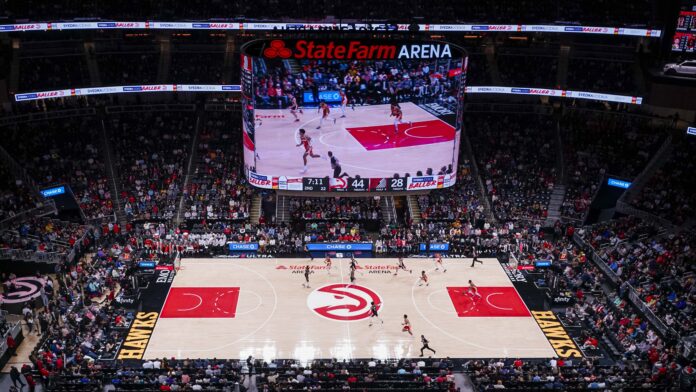
The Atlanta Hawks have worn different looks—highlight-film flash, defensive grit, pace-and-space precision—but the throughline is the same: spacing, discipline, and stars who bend the middle of the floor. Inside State Farm Arena, that identity reads clearly: shoot when it’s clean, share when it’s not, and make the next defensive rotation on time.
From Dominique to Now: How the Identity Evolved
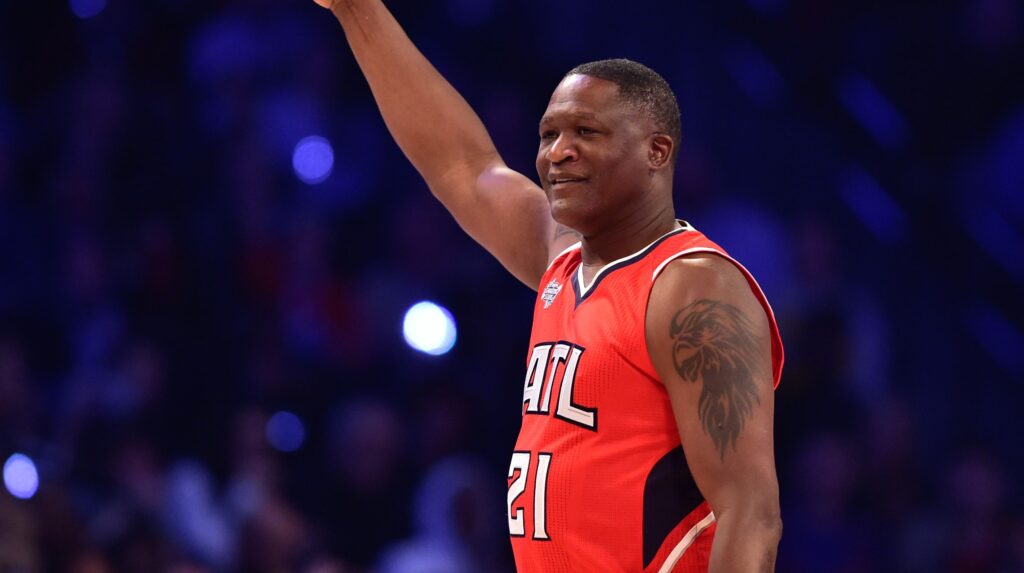
Dominique Wilkins framed the national image—scoring titles, aerial theater, and a standard that still defines the jersey. The 1990s layered in edge and rim protection with Mookie Blaylock and Dikembe Mutombo.
In the 2008–2014 window, Joe Johnson and Al Horford stabilized yearly playoff trips. Then came the system peak: Mike Budenholzer’s 2014–15 group won 60 games, played five-out read-and-react, and proved you could run the table with stars-by-committee when the ball didn’t stick.
The present era belongs to Trae Young—pull-up gravity and passing angles other guards don’t see—alongside Dejounte Murray, Clint Capela, and a rotation that now runs through Quin Snyder, hired as head coach in February 2023. Snyder’s template looks familiar: motion, spacing, and reads that turn helpers into late-arrivers.
Rivalries You’ll Feel
Knicks: The 2021 first-round series at Madison Square Garden turned up the temperature, with Young’s late-clock poise and the defense’s squeeze on New York’s primary options.
Celtics: Multiple postseason meetings across eras—Dominique vs. Bird in the ’80s lore, then modern chapters in 2016 and 2023—keep this one current. Boston’s length and two-star creation stress ball security and glass; Atlanta’s counter is tempo control and middle-third shot quality.
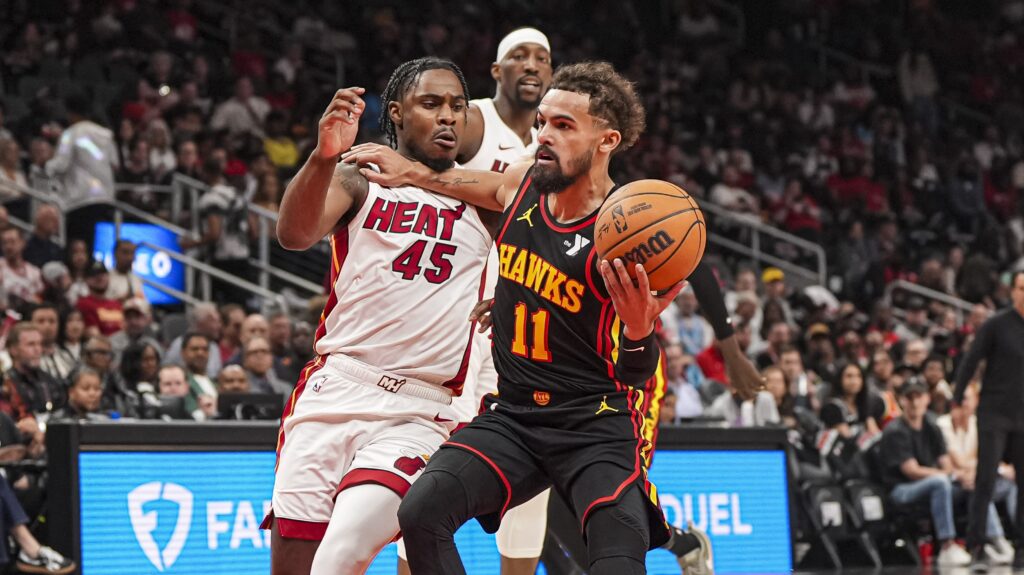
Heat: Division familiarity plus schematic contrasts: Miami’s switching and zone pockets versus Atlanta’s pace and early-clock touch shots. Games swing on turnover avoidance and second-chance control.
What a Hawks Game Actually Tests
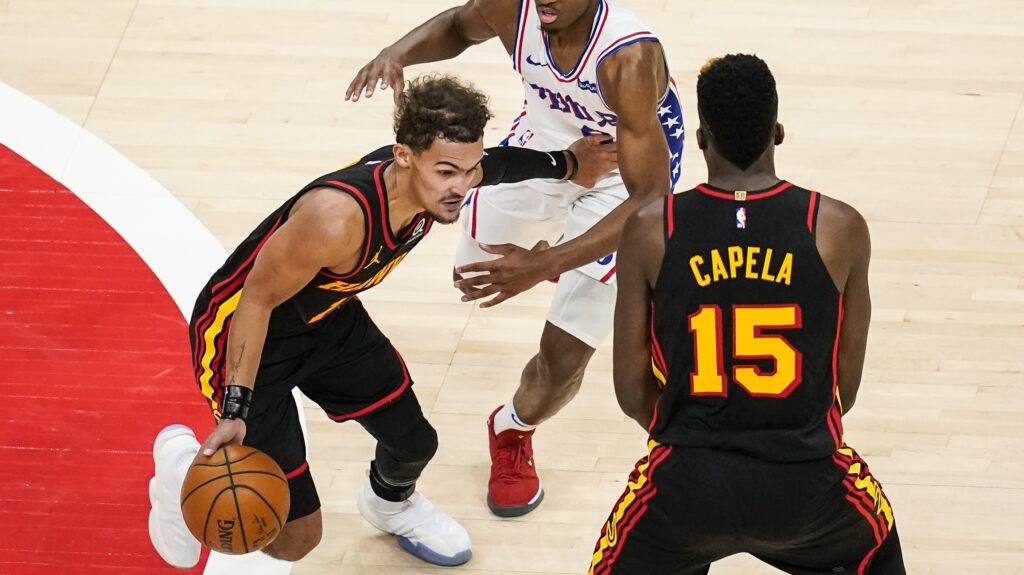
Early possessions tell the story. When Atlanta wins first actions—empty-corner drives, Spain pick-and-roll wrinkles, slot cuts—the defense stretches, and Young manipulates help with lobs and skip reads.
When opponents blow up those entries, the night becomes about late-clock craft and whether the Hawks can win the glass without overloading the paint. Snyder’s groups aim for a simple balance: threes when the feet are set, twos at the rim when a helper over-commits, and midrange only when a star has the matchup and the clock demands it.
Defensively, the asks are clear: show a body at the nail to shrink drives, finish the possession on the glass, and live with contested jumpers over free lanes. When the rotations are crisp, Atlanta turns misses into organized runs; when the first rotation is late, the scramble taxes legs and fouls follow.
Eras and Names (A Quick Map)
- Highlight Factory: Dominique Wilkins, Doc Rivers, Kevin Willis
- Grit-and-Glass: Mookie Blaylock, Dikembe Mutombo, Steve Smith
- Playoff Mainstay: Joe Johnson, Al Horford, Josh Smith, Kyle Korver
- Modern Core: Trae Young, Dejounte Murray, Clint Capela, Jalen Johnson; HC Quin Snyder
State Farm Arena: What It Feels Like
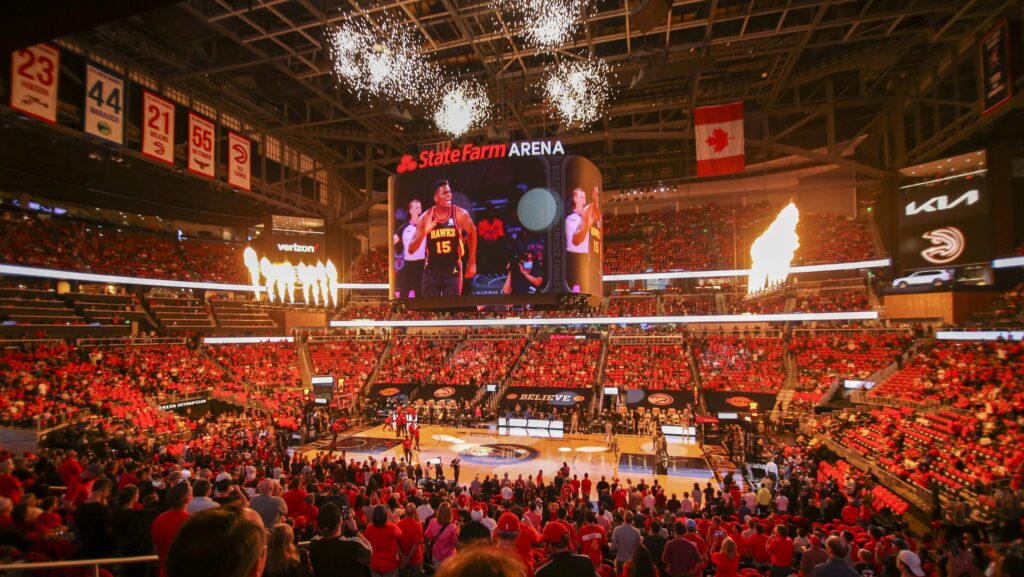
The lower bowl compresses sound, and the corners give clean, full-court context if you’re bringing a first-timer. Concourse flow is straightforward; plan your route by section markers rather than storefronts so you’re not swimming upstream at halftime. Expect music-forward intros and a crowd that responds to pace—runs feed on quick stops and early-clock threes.
Why These Chapters Still Matter
Because they explain how to watch. The 2015 team proved spacing and trust can scale even without a singular MVP. The 2021 surge proved a self-creating star can tilt a series when the environment turns hostile. The current group, under Snyder, blends both lessons: modern spacing and tempo with the freedom for a star to decide a quarter.