
The Atlanta Falcons built an identity around speed, space, and resilience—an approach that shows up on Sundays at Mercedes-Benz Stadium. This primer maps the traditions, eras, and rivalries that define the fan experience in Atlanta.
Origins and Identity
Atlanta’s best teams play fast without hurrying: stretch the field, stress the edges, and finish drives. Defense travels when the front sets edges and the secondary tackles in space; offense clicks when spacing and yards after catch turn timing into explosives. The connective tissue is poise—finish the four-minute drill and protect field position.
Traditions That Stick
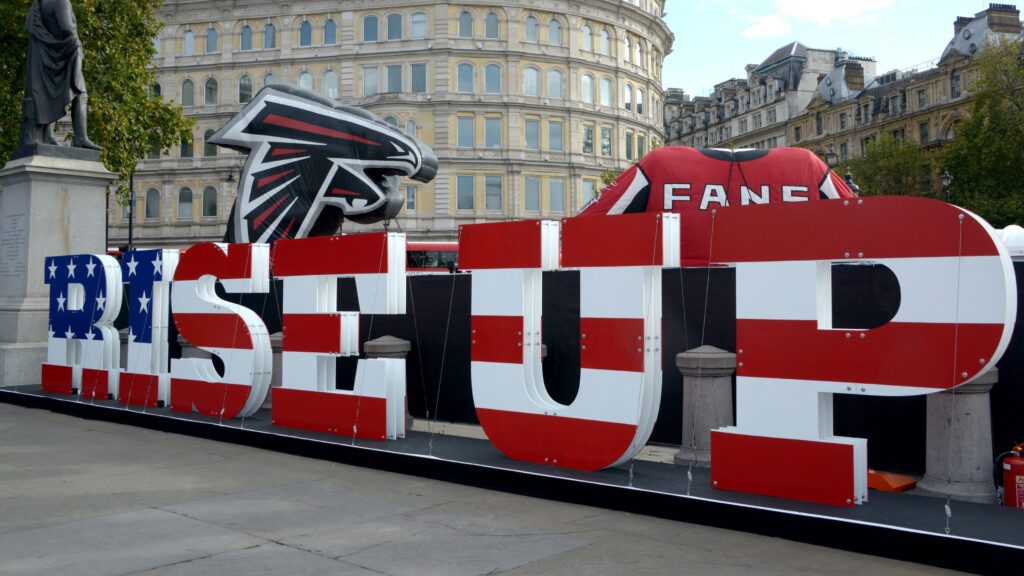
“Rise Up” started as a rallying cry and became a call-and-response woven into pregame videos and in-stadium prompts. The late-’90s “Dirty Bird” wasn’t just a dance; it was a tone for an NFC title run. Throwback looks keep the lineage visible, and the “Brotherhood” ethos from the 2016 run shows up in how huddles and sidelines manage end-game moments.
Saints: The Constant
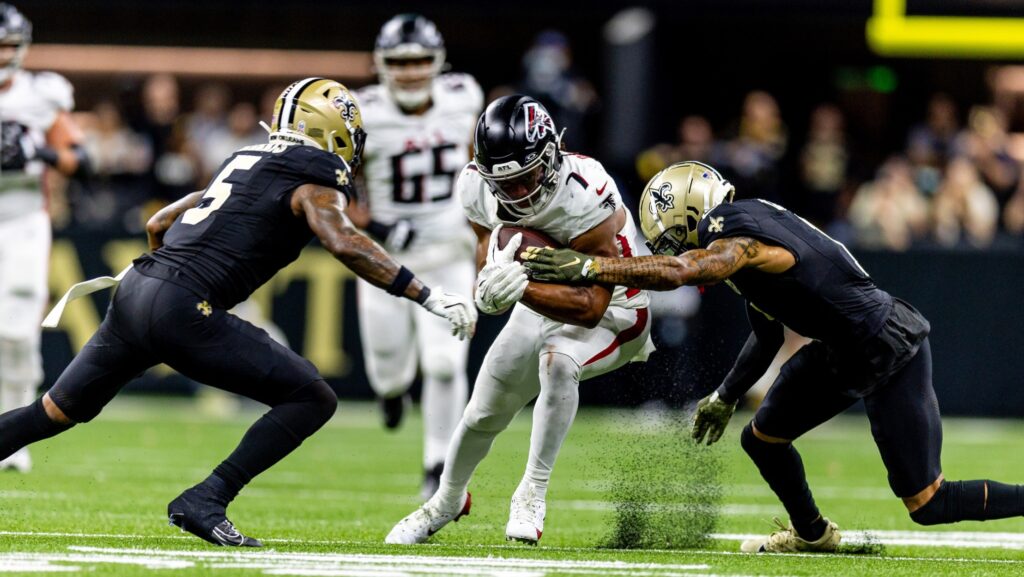
The rivalry with New Orleans is the calendar’s heartbeat—close travel, split households, and division stakes. Noise builds early, and special teams often swing field position. For a deeper dive on how it evolved and why it still stings twice a year, see Falcons–Saints Explained.
Panthers: Edges and Matchups
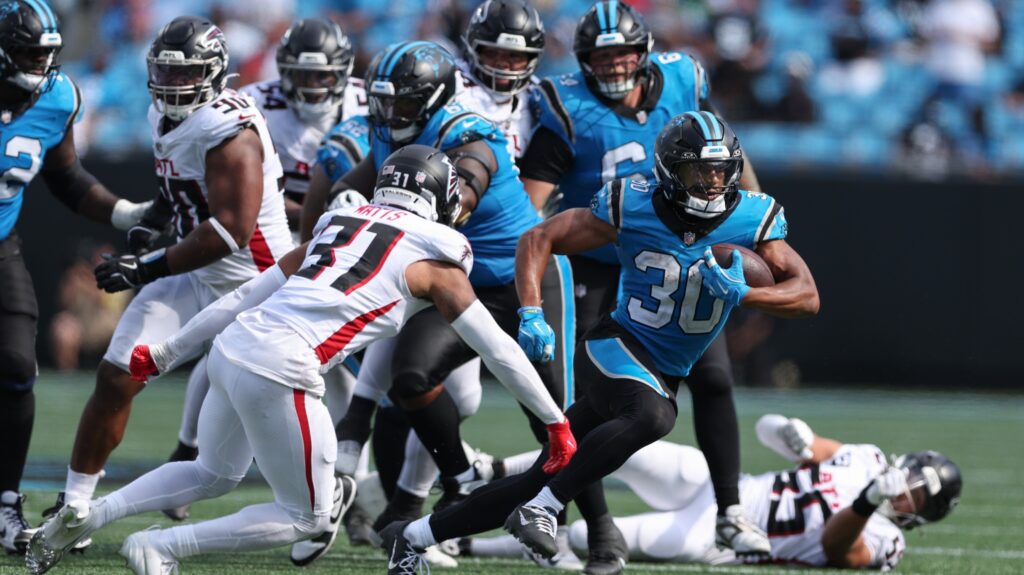
Carolina games tilt on red-zone sequencing and third-and-medium. When the Panthers’ front squeezes spacing, Atlanta answers with route craft and YAC; when the Falcons keep early-down rhythm, the game flows on their terms.
NFC South Texture
Division ball is repetition with variation—familiar looks, new personnel. That’s why late-season meetings feel like chess more than track. The lesson Atlanta carries into January is the same each year: clean football wins—no free bases, no missed fits, and crisp situational calls.
Eras and Names
In the 1990s, Deion Sanders, Jessie Tuggle, and Jamal Anderson gave the franchise a national profile and a swaggering NFC title run. The 2000s ushered Michael Vick electricity alongside Alge Crumpler and Roddy White, with Mike Smith stabilizing the back half of the decade.
The 2010s featured Matt Ryan, Julio Jones, Tony Gonzalez, and Devonta Freeman, peaking under Dan Quinn with an NFC championship. The 2020s core—Grady Jarrett, A.J. Terrell, Kyle Pitts, Bijan Robinson—leans versatility and space.
Game Day in Atlanta
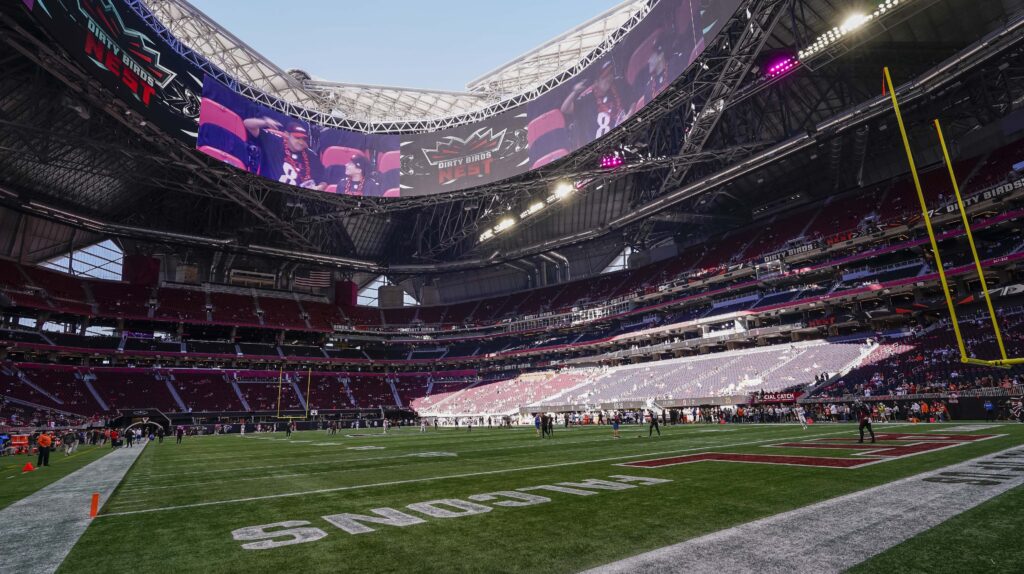
At Mercedes-Benz Stadium, entries are quick, sightlines are clean, and concourses return you to your seat fast—noise sustains without muddying the field. For first-timers, lower-bowl sidelines between the 20s make the Falcons’ tempo and spacing easy to read.
Why Certain Moments Endure
Falcons lore often hinges on sequences, not just single highlights: a field-position flip, a well-timed mesh on third-and-5, a four-minute drill that bleeds out a lead. When the identity clicks, Atlanta wins the quiet plays that stack into a finish.
Roster Staples (Quick Map)
- Front Seven: Jessie Tuggle → John Abraham → Grady Jarrett
- Corners & Safeties: Deion Sanders → Desmond Trufant → A.J. Terrell
- Pass Game: Roddy White → Julio Jones → Kyle Pitts/Drake London
- Backfields: Jamal Anderson → Michael Turner → Bijan Robinson


