
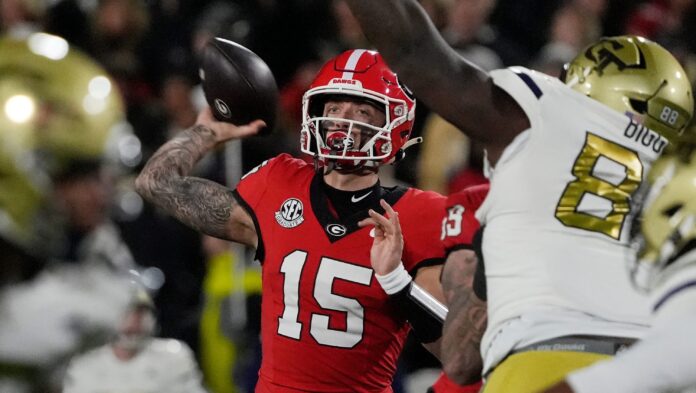
The Georgia Bulldogs measure seasons in Saturdays, but one date rewires the state. Georgia vs. Georgia Tech—Clean Old-Fashioned Hate—isn’t just proximity; it’s style, memory, and the way a year sounds when the Chapel Bell rings.
Inside Sanford Stadium or down on North Avenue, the game turns small choices into headlines: which team owns early downs, who steals a possession, whose star bends the middle third.
Where It Starts (And Why It Stuck)
The origin story is older than almost anything else in the SEC footprint. The first meeting came in 1893, a Tech win that helped harden identities on both campuses and seeded traditions that outlast players and coaches.
The series alternated Athens and Atlanta for nearly a century, survived conference changes, skipped only the 2020 pandemic season, and kept the same core ask: win your leverage, tackle in space, and don’t blink on special teams. See Georgia Tech’s traditions page on Clean Old-Fashioned Hate.
Chapters That Still Shape the Temperature

The 1990s left scar tissue on both sides. In 1999, a last-seconds ruling at the goal line—remembered as the Jasper Sanks fumble—fed Tech’s 51–48 overtime win and a winter of argument; even Georgia’s own game notes later filed it under “plays fans will argue about forever.”
A decade later, 2008 flipped a script in Athens: Paul Johnson’s option erased a 16-point deficit, and Tech won 45–42, a modern proof that edges, eye discipline, and yards after contact can undo talent on paper.
In 2014, the rivalry went to overtime in Sanford; Tech’s 30–24 win reinforced how a single red-zone snap—or a special-teams swing—decides November.
Styles in Conflict
Georgia’s best versions under modern staffs win with structure: first-down efficiency on offense, then a defense that squeezes space and denies freebies.
Tech’s most disruptive chapters arrive when the Jackets set the edge, force assignment busts, and make third-and-manageable feel inevitable. The emotion is real, but the outcomes are usually rational: early-count throws, tackling in the alley, and clean special teams travel in either stadium.
Names That Carry Across Eras

You hear them because they explain outcomes, not because they’re folklore: Buck Belue rescuing a 1978 two-score hole; Joe Hamilton bending third-downs into explosives; Jasper Sanks and a freeze-frame; Roddy Jones and Jonathan Dwyer turning the 2008 second half into a track meet; and the modern rotations of backs, tight ends, corners, and edge players who make this game feel familiar even as jerseys change.
What Actually Decides It (Short List)
- First-Down Math: Win early and both call sheets grow; lose it and the game shrinks to protection rules and tight windows.
- Explosive Prevention: One missed fit becomes six; both staffs build Saturdays around not letting that happen.
- Kicking Game: Hidden yards in November become points; this series has a way of letting one snap rewrite a month.