

When the Atlanta Falcons chased traits without translation, timelines slipped and resources got spent fixing April in March. This ranks the worst Falcons draft picks ever—contextualizing why certain first- and second-round swings never paid off.
(The palate cleanser—the best Falcons draft picks.)
The Worst Falcons Draft Picks
Aundray Bruce (1988, Round 1 Pick 1) — OLB
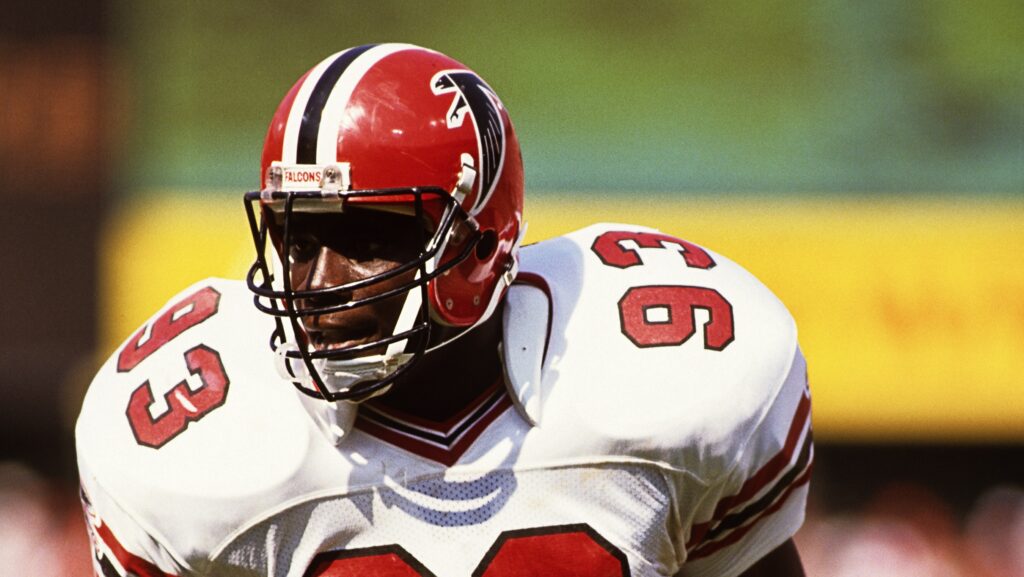
Aundray Bruce remains a cautionary tale: No. 1 overall at a non-QB spot has to be a weekly multiplier. The traits never translated into down-to-down dominance, and the miss at that altitude rippled through multiple draft cycles. When you whiff this high, it stalls timelines.
Jamaal Anderson (2007, Round 1 Pick 8) — DE

Jamaal Anderson had prototype size and movement but never became the disruptive edge Atlanta needed. Flashes without consistent pressure forced the team back into the pass-rush aisle repeatedly. It’s the classic “traits over tape” lesson at a premium position.
Bruce Pickens (1991, Round 1 Pick 3) — CB

Bruce Pickens was an early-capital swing at shutdown corner that didn’t land. With top-three expectations, the leash is short; the translation to pro coverage never fully arrived. The result: another early pick spent on the same problem soon after.
Michael Booker (1997, Round 1 Pick 11) — CB
Michael Booker brought traits without stickiness against NFL routes. Short tenure, long tail of need—especially painful in an NFC landscape built on play-action and boundary isolations. Early CB misses compound fast.
Peria Jerry (2009, Round 1 Pick 24) — DT

Peria Jerry arrived when the roster needed reliable interior disruption, but injuries derailed the plan. The hole at 3-tech meant more resources spent where a hit would’ve finished the puzzle. Windows are fragile; availability matters.
Takkarist McKinley (2017, Round 1 Pick 26) — DE

Takk McKinley flashed speed-to-power but never sustained finishes that flip third downs. Pressure without sacks doesn’t close drives, and off-field volatility shortened the runway. Another reminder that edge profiles must pair traits with production.
Jalen Collins (2015, Round 2 Pick 42) — CB

Jalen Collins had size/speed you can’t teach, yet availability and consistency undercut value. A few memorable moments aside, the reliability never stabilized. Second-round corners have to become starters; this one didn’t stick.
Sam Baker (2008, Round 1 Pick 21) — OT

Sam Baker isn’t a classic bust, but recurring injuries at a premium position during Ryan’s early years made it costly. First-round tackles are supposed to erase worries; his health kept the worry light on.
Sean Weatherspoon (2010, Round 1 Pick 19) — LB

Sean Weatherspoon brought energy and leadership when he was on the field, but injuries clipped the value curve. Culture counts, yet Round 1 requires availability to match. The result: a good player whose impact never fully compounded.
Honorable Mentions — Worst (Biggest Busts & Misses)
- Peter Konz (2012, Round 2 Pick 55) — C/G. Konz never translated college dominance to the pros; power issues and injuries kept him from locking a starting spot long-term.
- Ra’Shede Hageman (2014, Round 2 Pick 37) — DT. Hageman had traits on traits, but inconsistency and off-field issues prevented a breakout.
- Tony Smith (1992, Round 1 Pick 19) — RB. Smith was a first-round swing for a feature back that never materialized; low production made the opportunity cost sting.
- Michael Jenkins (2004, Round 1 Pick 29) — WR. Jenkins had moments, but for late-R1 capital in a WR room starving for a true No. 1, the ceiling never arrived.
- Jimmy Williams (2006, Round 2 Pick 37) — DB. Williams brought size and versatility, but availability and role fit never coalesced into a long-term starter.
Clarification: DE Jamaal Anderson (2007) ≠ RB Jamal Anderson (1994) of ’98 Dirty Bird fame. The running back is a franchise icon; the defensive end is a miss.
What This Group Says About Atlanta
The misses cluster around traits-first bets at EDGE/CB and availability concerns at premium spots. The lesson set is durable: draft disruption that shows up on tape, prioritize offensive-line floor, and reserve aggression for true blue-chip profiles. When the Falcons follow that script, Sundays feel different at Mercedes-Benz Stadium.


