
The Georgia Bulldogs don’t just kick off a game; they stage a day. At Sanford Stadium, three traditions set the rhythm long before the first snap and echo long after the last: the Dawg Walk, the Chapel Bell, and Calling the Dawgs.
Here’s how each one actually works on the ground, why it matters, and what a first-timer should know.
The Dawg Walk (Pregame Pulse)
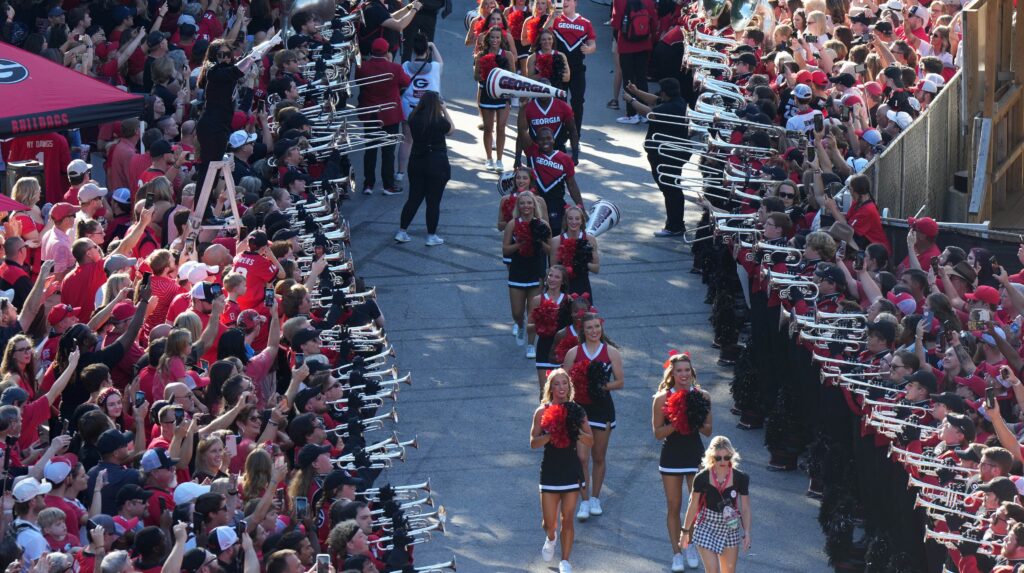
Hours before kickoff, the team buses pull up along Lumpkin Street, and the roster moves through a corridor of noise toward the locker room. This isn’t a quick handshake line; it’s a slow procession that lets fans see the faces they usually only know by number.
If you’re bringing someone new, post up early on the rail nearest the gate they’ll enter and pick a landmark behind you so the group can re-find the spot after a drink or bathroom run.
The Dawg Walk sets the tone: you feel the roster’s size, the travel suits, the calm eye contact. It’s the first cue that this is a Georgia Saturday, not just another game.
The Chapel Bell (Postgame Signal)
When the clock runs out and the crowd empties into downtown, the sound you hear is the old bell at the edge of North Campus. Students ring it for a while—sometimes a long while—and alumni cut through campus just to pull the rope once.
The bell doesn’t replay a highlight; it marks the whole afternoon: the pregame meet-up, the third-down stop, the walk home. If you want the moment without the crush, angle in from the side streets after the initial surge.
You don’t need a rule book for etiquette—wait your turn, give it a pull, take your photo, make room for the next person. (The Chapel Bell is covered on UGA’s official traditions page as well.)
Calling the Dawgs (In-Game Cadence)

Inside the bowl, the chant isn’t a novelty—it’s a timing device. You’ll hear it as teams break the huddle, after big plays, and before decisive snaps. It’s short, loud, and unmistakable, designed to crest right as the ball is snapped.
The point isn’t to be clever; it’s to be unified. If you’re showing a first-timer where to sit, lower-bowl sidelines between the 20s put the chant right on top of you and make the field feel close.
Where to Stand, When to Arrive (So You Actually See It)
If the Dawg Walk is on your list, check your gate and pick the rail along the team’s path an hour-plus before kickoff so you’re not three rows back working through shoulders. If you plan to ring the bell after, leave through the North Campus side to avoid the slowest cross-currents on Lumpkin and Broad.
And if your group tends to scatter, set a meeting point inside the stadium that isn’t a concession stand—use a section number marker instead. Those small choices keep the day smooth and let you actually enjoy the traditions instead of chasing them.
Why These Three Endure
They do different jobs. The Dawg Walk is proximity; you’re eight feet from the players and coaches, and the noise is personal. Calling the Dawgs is coordination; the stadium becomes a single voice that rides the snap count.
The Chapel Bell is memory; it turns a score into a day you can hear, even from blocks away. Together they anchor the Georgia experience and give newcomers a few reliable touchstones to carry forward.


